


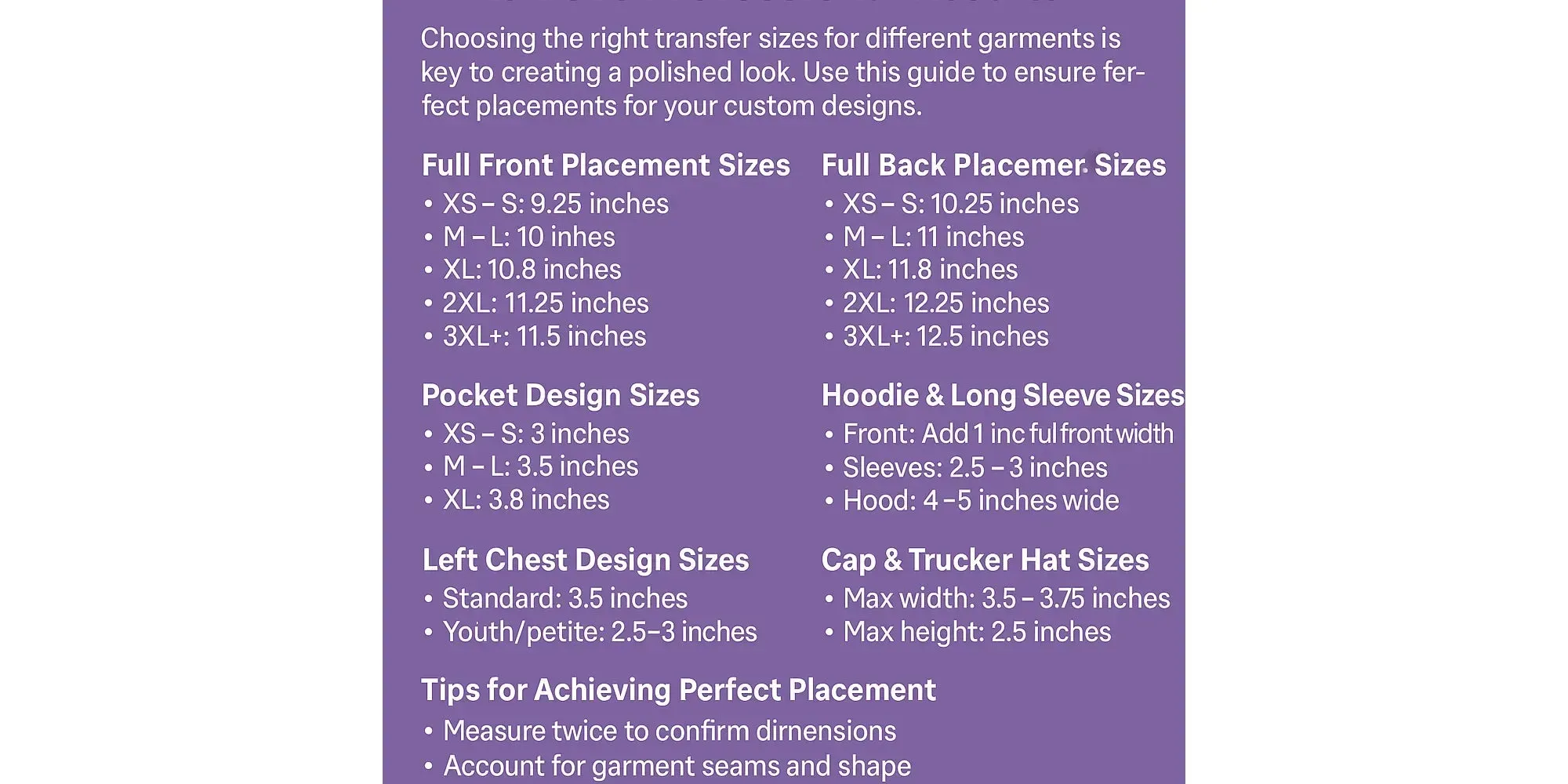
In the ever-evolving landscape of custom t-shirt printing, the adoption of DTF transfer by size techniques is revolutionizing the way apparel businesses operate. This innovative method, rooted in advanced DTF transfer technology, allows for precision and quality that meets the diverse needs of consumers. By leveraging size-specific printing, businesses can create personalized designs that not only fit perfectly but also resonate with customers’ unique styles. The ease and efficiency of direct-to-film transfer processes empower entrepreneurs to enhance their product offerings while streamlining production. In a market that craves individuality, embracing DTF transfer by size techniques is a vital strategy for success.
As the world of apparel customization embraces new methods, Direct-to-Film (DTF) printing techniques, particularly those focused on size-specific approaches, are gaining prominence. This process accommodates the increasing demand for personalized clothing, ensuring that each piece is tailored to the wearer’s specifications. Businesses are now able to utilize innovative printing methods that not only enhance the quality of their products but also reduce material waste, paving the way for more sustainable practices. By optimizing direct-to-film transfer strategies, brands can better engage with their audience and create a lasting impression in the competitive custom t-shirt market. As such, these advancements position apparel companies to thrive in an industry that values both creativity and efficiency.
The Impact of DTF Transfer Technology on Apparel Customization
In recent years, DTF transfer technology has revolutionized the landscape of apparel customization by providing unparalleled quality and versatility in printing. By allowing for intricate designs to be applied directly onto fabrics, businesses can create personalized clothing that resonates with consumers. This innovation not only enhances product offerings but also meets the growing demands of a market increasingly driven by individuality and self-expression. The DTF process ensures that colors remain vibrant and designs sharp, allowing custom t-shirt printing to flourish in a competitive environment.
Furthermore, DTF technology allows for adjustments in printing techniques according to specific garment sizes, enhancing the overall consumer experience. This capability helps businesses to deliver products that fit better and are more aesthetically pleasing. As t-shirt brands strive for a personalized approach to meet customer demands, DTF transfer technology emerges as a valuable ally, enabling businesses to distinguish themselves through high-quality, custom apparel that captivates their audience.
Understanding Size-Specific Printing Techniques
Size-specific printing techniques are critical in the realm of DTF transfer by size techniques, ensuring that designs are tailored to perfectly fit various garment sizes. By employing these methods, businesses can precisely position graphics and logos, which is vital for achieving optimal visual appeal. This technique not only improves the aesthetics of the products but also plays a significant role in reducing material waste, as companies can design sizes that correspond to the unique dimensions of each garment.
Additionally, implementing size-specific printing allows for a more efficient manufacturing process. Businesses can streamline production by adjusting film sizes for different t-shirt sizes, leading to greater efficiency and reduced costs. With the growing emphasis on sustainability, size-specific printing can contribute to lowering the environmental impact of apparel production, making it a win-win for both businesses and environmentally conscious consumers.
Maximizing Efficiency and Reducing Waste
The efficiency of DTF transfer by size techniques plays a pivotal role in minimizing waste and maximizing productivity for apparel businesses. Since these techniques tailor the application of designs to specific garment sizes, they prevent overprinting and reduce fabric discard, leading to significant savings in quality materials. By reducing waste, businesses can enhance their profit margins while simultaneously adopting more sustainable practices, which resonate well with today’s eco-aware customers.
Moreover, efficient processes translate into quicker turnaround times for orders. As businesses optimize their operations through DTF technology, they can cater to an increasing demand for custom apparel, ultimately driving consumer satisfaction. This shift towards efficiency not only benefits the bottom line but also strengthens the brand’s reputation among consumers, who appreciate brands that are mindful of both their financial and environmental footprints.
The Growing Demand for Customization in Apparel
The modern consumer is increasingly gravitating towards personalized clothing options. The DTF transfer process enables businesses to directly respond to this demand, providing custom t-shirt printing services that can cater to unique tastes and individual preferences. This shift towards customization reflects a broader trend in the apparel industry, as more consumers seek out products that express their personal identities and styles.
Through DTF transfer by size techniques, t-shirt businesses have the opportunity to tap into niche markets that require specific sizes or designs. This capability translates to broader market reach and increased sales potential, allowing brands to engage a more diverse clientele. By meeting the growing demand for customization, companies can foster deeper customer connections and create loyal advocates for their brand, ultimately enhancing their competitive edge.
Simplifying the DTF Application Process for Businesses
One of the remarkable features of DTF transfer technology is the simplicity of its application process. Unlike traditional printing methods that often require complex machinery and extensive training, DTF technology is designed to be accessible for businesses of all sizes. This user-friendly approach democratizes apparel customization, empowering small businesses and startups to enter the market without significant financial barriers.
Moreover, the ease of use associated with DTF applications allows staff to quickly learn and adopt new techniques. As businesses grow, this flexibility ensures that they can adapt and scale operations without prohibitive overhead costs. By streamlining the application process, DTF not only accelerates production but also encourages innovation within the apparel sector, making it an ideal choice for aspiring entrepreneurs looking to make their mark.
Ensuring Quality and Longevity with DTF Transfers
Quality assurance is paramount for businesses committed to building a trusted brand in the apparel industry, and DTF transfers excel in this area. Known for their durability, DTF prints resist fading, cracking, and peeling, ensuring that custom t-shirts maintain their vibrancy and integrity even after multiple washes. This quality aspect is not only vital for customer satisfaction but also aids in establishing a brand’s reputation for excellence in product craftsmanship.
Furthermore, the long-lasting nature of DTF transfers translates into excellent value for consumers. When clients purchase a personalized t-shirt, they are not just investing in aesthetics but in a product that promises longevity. Brands that prioritize quality can foster a loyal customer base, as repeat customers are likely to return to the brands that deliver reliable and well-crafted products, ultimately driving sustained growth in a competitive market.
Frequently Asked Questions
What are the benefits of using DTF transfer technology for custom t-shirt printing?
DTF transfer technology offers several benefits for custom t-shirt printing, including vibrant colors, precision printing, and the ability to create intricate designs. By utilizing size-specific printing techniques, businesses can ensure designs fit perfectly on various garment sizes, reducing waste and enhancing customer satisfaction.
How does DTF transfer by size techniques minimize waste in apparel customization?
DTF transfer by size techniques minimizes waste by allowing manufacturers to use film sizes tailored to the specific dimensions of t-shirts being printed. This not only optimizes ink consumption but also cuts down on excess material, contributing to a more sustainable approach to apparel customization.
Can DTF transfer technology meet the rising demand for personalized clothing?
Yes, DTF transfer technology is highly effective in meeting the demand for personalized clothing. By implementing DTF transfer by size techniques, businesses can produce custom designs that cater to individual customer preferences, thus appealing to a wider audience and tapping into niche markets.
What makes DTF transfer by size techniques an accessible option for small businesses?
DTF transfer by size techniques require minimal equipment and have a straightforward application process, making it accessible for small businesses. Unlike traditional printing methods that may involve complex setups and significant costs, DTF allows aspiring entrepreneurs to enter the custom apparel market without financial strain.
How does DTF transfer technology ensure the longevity of printed designs?
DTF transfer technology ensures the longevity of printed designs by producing durable transfers that can withstand wear and tear, fading, and cracking over time. This quality assurance is critical for businesses aiming to build a reputable brand known for high-quality, long-lasting products.
What impact have size-specific DTF techniques had on businesses in the apparel industry?
Size-specific DTF techniques have led to significant positive impacts in the apparel industry, with many businesses reporting increased orders and expanded customer bases. By offering customizable sizes and designs, brands can engage previously untapped demographics, ultimately driving sales and enhancing brand loyalty.
| Key Point | Description |
|---|---|
| Transformation of T-shirt Business | Utilizing DTF transfer by size techniques can innovate production processes and meet customer demand for personalized clothing. |
| Precision Printing by Size | Tailors designs to fit specific garment sizes, reducing waste and enhancing customer satisfaction. |
| Reduced Waste and Cost-Effectiveness | Eco-friendly technique that utilizes smaller film sizes, optimizing ink consumption and increasing profit margins. |
| Customization Demand | Allows efficient production of custom designs tailored to individual sizes, appealing to niche markets. |
| Simplified Application Process | User-friendly process with minimal equipment requirements, making it accessible for small businesses. |
| Longevity and Quality Assurance | DTF transfers are durable and withstand wear, fostering brand loyalty through consistent quality. |
Summary
DTF Transfer By Size Techniques represent a significant advancement in the customization of t-shirts, enabling businesses to enhance their offerings and meet growing consumer demand for personalized apparel. This innovative method not only increases precision in printing specific to garment sizes but also contributes to sustainability by reducing waste and optimizing costs. As customers increasingly seek customized clothing, adopting DTF technology allows t-shirt brands to maintain a competitive edge while ensuring high-quality and durable products. In a rapidly evolving apparel market, embracing DTF strategies can lead to business growth and greater customer satisfaction.