


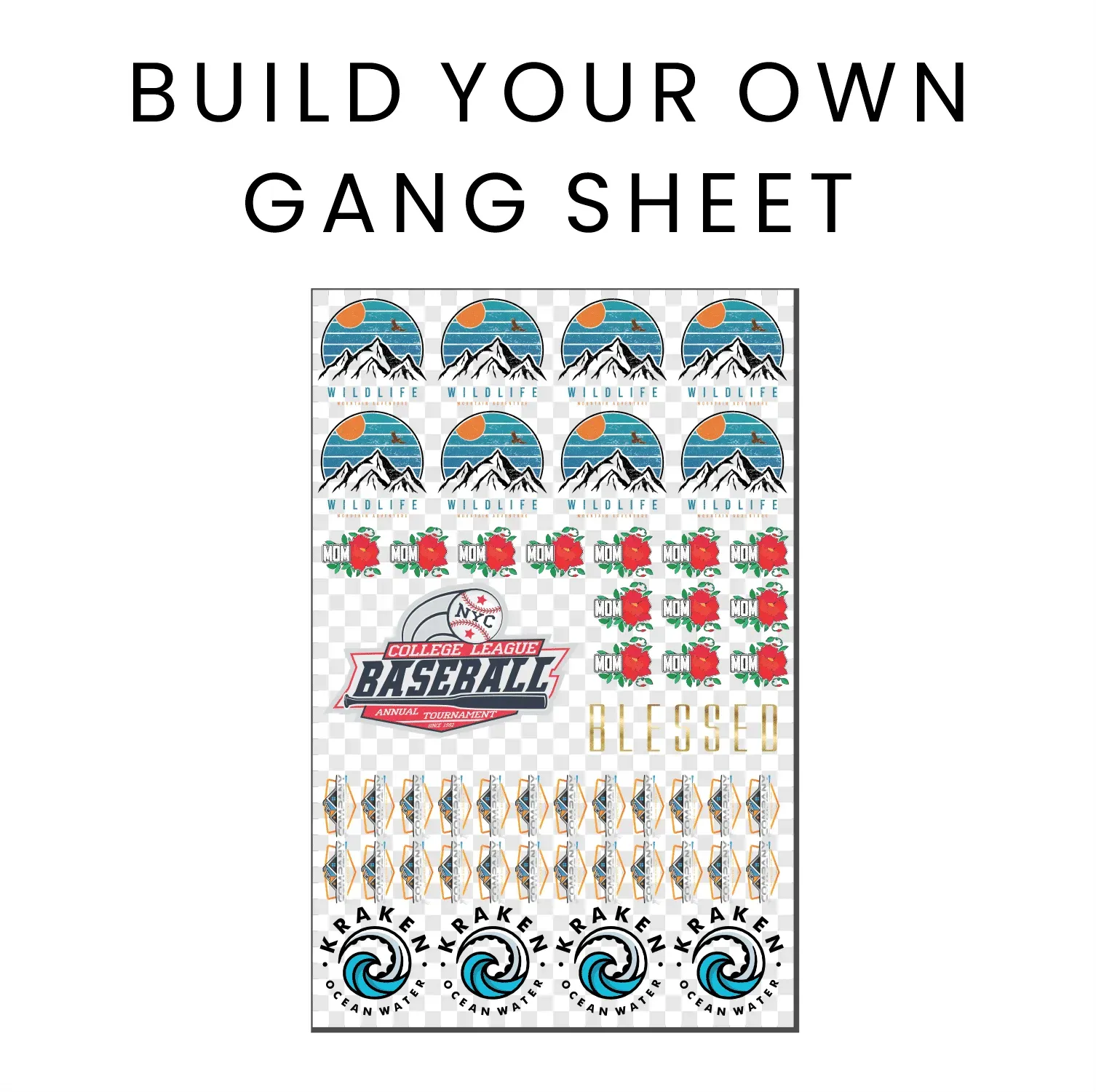
DTF Gangsheet Builder is a smart planning tool designed to organize multiple designs on a single transfer sheet, boosting efficiency for apparel printers. By automating layout decisions and accounting for gutters, it integrates with your DTF printing workflow to cut pre-press time. The system supports reusable templates and precise bleed margins to ensure consistent outputs across runs, seasons, and product lines. Thoughtful gutter spacing and baseline alignment help maintain color fidelity, especially on high-volume designs, where repeatability matters for consistent production planning. Adopting this tool can streamline production, reduce waste, and make multi-design orders more predictable across printers and substrates.
Another way to frame this tool is as a smart layout automation utility for digital transfer projects, designed to maximize sheet usage and minimize setup time. It supports a scalable approach to planning multiple designs on one substrate, turning manual grid work into a repeatable, efficient workflow. Users describe it as a garment decoration planning companion that aligns artwork, margins, and bleed without sacrificing quality. In practice, this alternative framing emphasizes how the software connects design software with printing and curing processes, streamlining production from file prep to final transfer. By focusing on the broader workflow—layout orchestration, template reuse, and batch optimization—you gain a clearer view of how such tools fit into modern DTF operations.
DTF Gangsheet Builder: Optimizing Multi-Design Layouts for Speed and Waste Reduction
The DTF Gangsheet Builder is designed to streamline multi-design layouts on a single gang sheet, maximizing printed surface area and minimizing waste. It automates tiling, accounts for gutter space, and aligns designs with print-ready margins, aligning with a typical DTF printing workflow. By handling the layout logic, it reduces manual measurement work on the DTF transfer sheet, speeding up setup time.
In real-world use, this translates to higher throughput in high-volume environments, less pre-press time, and more predictable color placement. The tool supports template reuse, import options, and integrates well with RIP software used in DTF transfers. For teams producing dozens or hundreds of transfers per shift, the DTF gangsheet builder becomes a critical productivity booster and a core part of gang sheet optimization strategy.
Enhancing the DTF Printing Workflow with Smart Templates and Color Management
Templates and import options enable consistent layouts across orders, reducing variability for DTF transfer sheets and ensuring efficient use of substrates. The DTF gangsheet builder helps manage bleed and safe areas, which is essential for reliable color reproduction in the DTF printing workflow.
Color fidelity is not guaranteed by layout alone, but aligning templates with ICC profiles and printer calibration minimizes shifts. The builder’s compatibility with RIP software means you can maintain accurate color on the DTF transfer sheet while preserving high-resolution artwork; large multi-design files become more manageable and less error-prone.
Achieving Precision on DTF Transfer Sheets: Bleed, Safe Areas, and Gutter Control
This section focuses on how precise layout and gutter control reduce misregistration and edge artifacts on DTF transfer sheets. The DTF Gangsheet Builder provides explicit gutter controls and a robust grid system to keep designs from colliding and to maintain consistent margins.
By accounting for bleed and safe areas, you can print designs with confidence, avoiding edge loss or unintended white borders after transfer. Testing across substrates remains important; run test sheets to validate spacing on different fabrics and widths. When you pair precise layout with a solid DTF printing workflow, you get predictable results and fewer reprints, a core benefit of gang sheet optimization.
Integrating with RIPs and Substrates: Consistency Across Materials
The DTF gangsheet builder is designed to complement common RIP software, so you maintain consistent color output and accurate alignments across multiple designs. It works well with standard DTF transfer sheet production pipelines and helps ensure that the output remains faithful to the design intent when printed and cured.
Substrate variety—different fabrics, textures, coatings—requires adjustments to bleed and margins. Use test sheets across substrates to confirm spacing remains optimal. Batch management helps ensure consistent results, making it easier to scale up production while maintaining quality.
DTF Software Tips for Maximizing Gangsheet Efficiency
DTF software tips start with standardizing templates and reusable layouts for common sizes. Create batches of similar designs to minimize file handling; grouping similar artworks reduces reloading time and prevents misalignment.
Next, plan for substrate width and bleed margins; ensure color management is aligned by calibrating ICC profiles and proper RIP settings. Also, avoid bottlenecks by keeping designs on shared network storage or local drives with adequate performance, and conduct test runs before committing to large orders.
Real-World Use Cases: From Apparel Batches to Customization Shops
In apparel production, many teams and events require multiple designs in a single order. The DTF Gangsheet Builder helps to maximize press time on a single sheet, delivering consistent color reproduction across designs while reducing setup time for each batch.
Customization shops and small studios benefit by expanding output with a scalable workflow; the builder enables multi-design production without sacrificing quality, and it’s easy to integrate into existing DTF transfer sheet production lines. This aligns with practical DTF printing workflow goals and demonstrates how efficient gang sheet optimization scales across different business models.
Frequently Asked Questions
How does the DTF Gangsheet Builder optimize gang sheets within a DTF printing workflow?
The DTF Gangsheet Builder automates layout decisions with grid logic and gutter controls, enabling efficient tiling and maximizing printed surface area. It reduces pre-press time, speeds hand-off to the printer operator, and supports templates and imports for recurring jobs. In a typical DTF printing workflow, this improves consistency and throughput.
Can templates and recurring orders be efficiently handled with the DTF Gangsheet Builder for DTF transfer sheets?
Yes. You can import designs and reuse templates for recurring orders, while the builder handles bleed and safe areas to ensure clean prints on DTF transfer sheets. This reduces setup time and improves consistency across multiple transfers within the DTF printing workflow.
How should I manage color fidelity and bleed when using the DTF Gangsheet Builder in a DTF printing workflow?
The builder helps manage bleed margins and safe areas, but color fidelity still depends on ICC profiles and printer calibration. Use the builder alongside proper color management in your DTF printing workflow to produce predictable results on DTF transfer sheets.
What is the role of the DTF Gangsheet Builder in RIP integration and high-volume DTF transfers?
The DTF Gangsheet Builder is designed to complement RIP software and the standard DTF printing workflow. Users report stability with large job queues and smooth operation alongside their RIP drivers; for large batches, using local storage can help avoid network-related hiccups.
What are common pitfalls of using the DTF Gangsheet Builder for gang sheet optimization, and how can I avoid them?
Common pitfalls include overcrowding designs, inconsistent sizes, not accounting for shrinkage, and over-reliance on automation. Avoid them by using sensible margins, size-based templates, conducting test prints, and validating layouts before printing.
What practical tips from DTF software tips can help me get started with the DTF Gangsheet Builder to maximize throughput?
Start with standardized templates for common sizes, plan for substrate variety, leverage bleed margins, verify color setup in the RIP with correct ICC profiles, and batch similar designs to minimize file handling. Run a full gang-sheet test print before large orders to confirm alignment, colors, and bleed.
| Aspect | Summary |
|---|---|
| What is the DTF Gangsheet Builder? | A specialized planning and tiling utility that arranges multiple designs on a single gang sheet for DTF transfers, automating layout decisions, considering gutter space, and helping ensure colors and designs print cleanly on one substrate. |
| Key benefits | Efficient tiling that maximizes printed surface and minimizes waste; reusable templates/import options to reduce setup time; built-in bleed/safe-area guidance for reliable prints; compatibility with standard RIP workflows. |
| Real-world performance | Throughput gains from quick gang-sheet layouts; improved layout accuracy with grid logic and gutter controls; robust file handling for large, high-res designs; bleed management that supports predictable results; reliable performance alongside common RIP/printers. |
| Practical tips | Standardize templates for consistency; plan for substrate width and bleed; use conservative bleed margins; verify color setup via RIP profiles; batch similar designs to reduce handling; run test prints before large orders. |
| Use cases | Apparel batches with multiple designs; customization shops offering quick-turnaround multi-slot transfers; small studios scaling from single-design runs to multi-design production. |
| Common pitfalls | Overcrowded layouts can cause crowding or interference; mismatched design sizes complicate tiling; failure to account for shrinkage/stretch; overreliance on automation without final human review. |
Summary
HTML table provided above summarizes the key points of the base content about the DTF Gangsheet Builder, including what it is, its benefits, real-world performance, practical tips, use cases, and common pitfalls.