


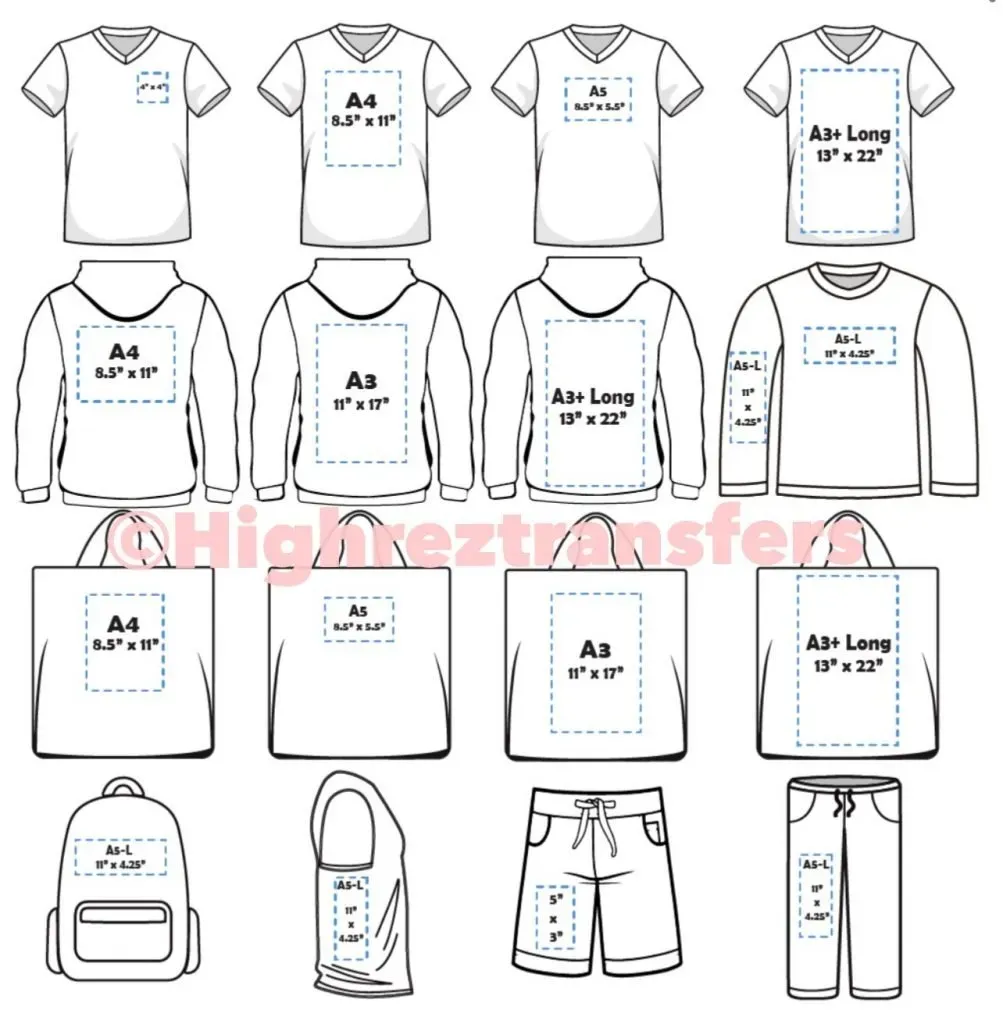
In the dynamic realm of custom apparel, understanding DTF transfer by size is crucial for success. Direct-to-Film (DTF) transfer technology empowers designers and businesses to create vivid, eye-catching graphics tailored specifically to various garment sizes. As this innovative printing method gains traction, mastering the intricacies of size optimization can set your custom clothing printing apart from the competition. By leveraging the DTF printing process, brands can efficiently apply graphics that resonate with their audience while maintaining quality and durability. In this guide, we will explore not only the benefits of size customization in DTF but also how it can elevate your custom apparel offerings to new heights.
When discussing DTF transfer optimization, it’s essential to explore various dimensions of graphic application for fabric. The approach to transferring designs, whether utilizing direct-to-film or alternative printing technologies, involves a keen understanding of how size plays a role in the overall aesthetic and practicality of custom garments. Terminology such as sizing adjustments and scalable prints will be pivotal as we delve into the mechanics of DTF techniques. As you navigate through the landscape of custom clothing printing, focusing on size-related factors will enhance your capability to produce striking apparel designs that meet diverse market demands. This exploration will not only highlight the versatility of the DTF printing process but also underscore the advancements in transfer technology that allow for remarkable creativity in custom designs.
Understanding DTF Custom Apparel and Its Impact on Size
DTF custom apparel has revolutionized the fashion industry by allowing for high-quality, intricate designs tailored to various garment sizes. This method uses Direct-to-Film technology, which provides the flexibility to create detailed graphics that can be customized according to the target audience. As more businesses recognize the importance of size adjustments in their apparel offerings, customizing DTF transfers to suit different sizes becomes increasingly essential. It enhances not only the fit of the apparel but also its appeal to specific demographics, ensuring that customers receive products that meet their individual preferences.
Moreover, understanding how size impacts the aesthetics of DTF custom apparel is crucial for brand identity. Smaller graphics often convey subtlety, making them ideal for classic clothing styles, while larger prints attract more attention and can effectively convey brand messages. As you explore the realm of DTF transfer by size, it’s important to consider how your designs will resonate with your audience, leading to a more personalized shopping experience.
The DTF Printing Process: Key Considerations for Size Customization
When utilizing the DTF printing process, particularly in relation to size customization, it is imperative to pay attention to several technical aspects. The resolution of the artwork is paramount; a minimum of 300 DPI is recommended to ensure your designs remain sharp and vibrant, regardless of print size. Additionally, the dimensions and placement of designs must be meticulously planned to fit perfectly on the apparel being used. This attention to detail not only affects the visual appeal but also the commercial viability of the product, as customers often base their purchasing decisions on the quality of design presentations.
Further, size customization in DTF is not just about aesthetics but also functionality. The size of the printed design influences how well it adheres to the fabric and how it performs over time. For example, larger designs might require adjustments in heat press duration and temperature, while smaller designs could necessitate careful placement to avoid distortion. Understanding these elements of the DTF printing process ensures a streamlined production workflow that maintains high-quality standards.
Materials Used in DTF Transfers: Choosing the Right Components for Size
The selection of materials used in DTF transfers directly impacts the success of size customization. Choosing the right release films is crucial, as different types of films can affect the transfer quality and the final finish of the prints. For instance, some release films are specifically formulated to work better with larger graphics, providing a smoother transfer experience. This aspect is particularly vital when scaling designs for different apparel sizes, as the film ensures that every intricate detail is accurately captured during the transfer.
Additionally, the choice of DTF inks plays a significant role in the overall quality of the final product. Water-based DTF inks, which are favored for their vibrant colors and eco-friendly properties, should be selected carefully to match the fabric and size of the apparel. When tackling larger designs, the ink coverage becomes even more critical to avoid fading or uneven results. Paired with the right adhesive powders, businesses can enhance the bonding process, ensuring that designs stand the test of time, irrespective of the size.
Application Process for DTF Transfers: Adapting to Design Size
The application process for DTF transfers requires careful consideration, especially when adjusting for design size. The printing phase is the first step where the design is printed onto a DTF film, and it’s essential that the ink settings are optimized for the specified size. For larger designs, adjustments may need to be made to ensure even ink distribution, preventing any areas from being overly saturated, which can lead to poor adhesion.
Following the layout, applying adhesive powder is crucial and must be adjustable based on specified design sizes. When working with larger prints, more adhesive may be required to ensure proper transfer and longevity. Finally, the heat pressing stage is vital; depending on the size, varying time and temperature settings must be applied to secure a flawless and durable bond, thereby minimizing the risk of peeling or fading down the line.
Benefits of Size Customization in DTF Transfers
Size customization in DTF transfers offers a multitude of benefits for businesses aiming to enhance customer satisfaction. By allowing for personalized designs adapted to different sizes, companies can cater to diverse audiences, including children’s wear, athletic gear, or specialized event merchandise. This strategic differentiation can significantly pull in various market segments, making it a valuable investment for a brand’s growth.
Moreover, flexibility in size customization also extends to merchandise strategies. Smaller prints typically work well for casual retail items, whereas larger designs grab more attention at promotional events, effectively increasing brand visibility. Such versatility not only strengthens a business’s market positioning but also creates innovative opportunities for marketing campaigns that resonate with a broader audience.
Recent Trends and Innovations in DTF Printing and Size Customization
The DTF transfer technology is continuously evolving, with recent innovations focusing immensely on size customization options. Emerging technologies in DTF printing are now capable of accommodating larger print sizes more efficiently, simplifying the production processes for businesses managing bulk orders. Such advancements not only enhance workflow but also expand the creative possibilities within custom apparel design.
Sustainability trends are also influencing DTF printing innovations. Many companies are now integrating biodegradable films and eco-friendly inks into their processes, aligning with the growing consumer demand for sustainable products. This careful consideration toward environmentally responsible materials does not compromise quality, showing that businesses can prioritize both size customization and sustainable practices within the DTF transfer landscape.
Frequently Asked Questions
What is the significance of size customization in DTF transfer technology?
Size customization in DTF transfer technology allows for tailoring design elements to fit different garment sizes, ensuring that logos and artwork are displayed at optimal proportions. This customization enhances the aesthetic appeal and branding potential of custom apparel, catering to various target markets.
How does the DTF printing process accommodate different print sizes?
The DTF printing process can accommodate different print sizes by adjusting the resolution and dimensions of the artwork before printing. This ensures that smaller designs maintain their clarity and larger designs are impactful, making size consideration vital for successful custom clothing printing.
What are the best practices for creating designs for DTF transfer by size?
Best practices for creating designs for DTF transfer by size include using high-resolution images (at least 300 DPI), understanding the print area limitations of the garment, and adjusting the artwork dimensions to ensure proportionate scaling. This allows for effective integration of your design into various custom apparel.
Can the materials used in DTF transfers impact the results based on size?
Yes, the materials used in DTF transfers can significantly impact the results based on size. For instance, different release films and adhesive powders may yield varying adhesion results depending on the size and detail of the print, making it crucial to select the right materials for optimal outcomes.
How do heat pressing settings vary with different design sizes in DTF transfers?
Heat pressing settings in DTF transfers vary with design sizes; larger designs may require longer pressing times and different temperature settings to ensure proper transfer and adhesion, while smaller designs may need less time. Adjustments must be made based on the specifics of each print size.
What benefits does size customization in DTF custom apparel offer for marketing?
Size customization in DTF custom apparel offers numerous marketing benefits, such as targeting specific demographics through tailored designs, enhancing visibility for events with larger prints, and fostering creative promotional strategies that resonate with various audiences, ultimately driving sales and brand engagement.
| Key Points | Details |
|---|---|
| What is DTF Transfer? | DTF transfer is a method for creating vibrant designs on fabrics using direct printing to film, making it ideal for various textiles. |
| Print Size and Design | Adjust design size for better branding. Smaller logos are subtle, while larger prints stand out. |
| Materials Used | Utilize compatible release films, water-based inks, and adhesive powders for high-quality prints. |
| Application Process | Follow steps: Printing, applying adhesive, and heat pressing. Adjust based on design size for best outcomes. |
| Benefits of Size Customization | Cater to different demographics and enhance merchandising options, offering strategic flexibility. |
| Recent Trends | Explore emerging technologies aiming for larger print sizes and environmentally friendly practices. |
Summary
DTF Transfer by Size is crucial for achieving optimal results in custom apparel production. By understanding the intricacies of print sizes, material selection, and the application process, businesses can significantly enhance the quality and impact of their designs. This comprehensive guide underscores the importance of tailoring prints to fit specific dimensions, utilizing the right materials, and staying abreast of industry trends. Mastering DTF transfer technology will give businesses a competitive advantage, enabling the creation of stunning, professional-grade custom clothing that effectively resonates with target audiences.