


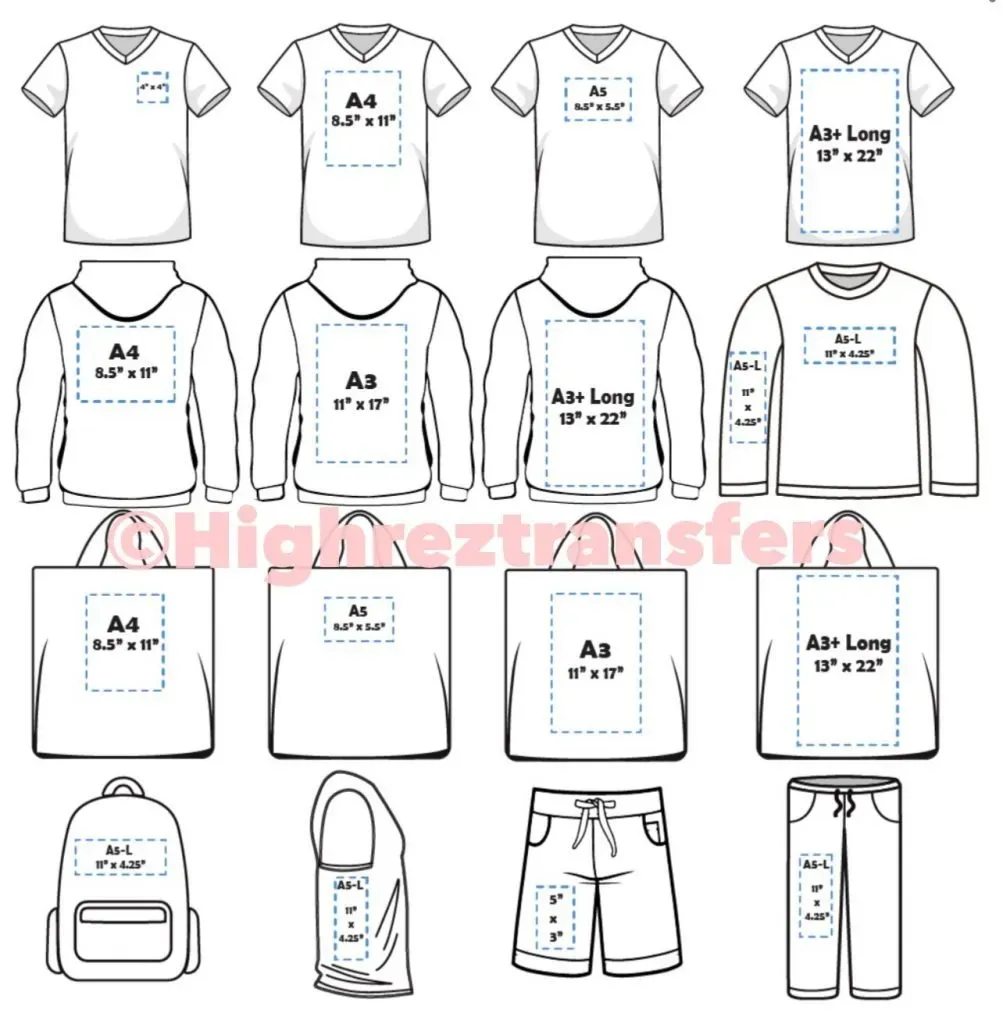
DTF Transfer Sizes play a crucial role in the realm of Direct-to-Film printing, a method that has become a game-changer for garment decorators. Understanding DTF transfer sizes is essential for beginners aiming to create stunning apparel, as it directly influences the outcome of your designs. In this guide, we will delve into the various sizes of DTF transfers, ensuring you grasp how size can enhance or limit your creative endeavors. Whether you’re a novice learning DTF printing for beginners or exploring advanced DTF transfer techniques, knowing the specifics of transfer sizes will empower your projects. Join us as we unravel the core aspects of DTF printing guide, offering insights on how to use DTF transfers effectively for optimal results.
When it comes to sizes of DTF transfers, it’s essential to grasp the various dimensions available in this innovative printing technique. From small decals designed for subtle branding to large graphic prints intended for eye-catching designs, understanding the significance of transfer sizes will greatly affect your printing success. This comprehensive guide will shed light on different transfer scale options, including how to apply them effectively in your projects. As you navigate the world of Direct-to-Film applications, familiarizing yourself with terms like transfer dimensions and image scaling will enhance your overall comprehension. Get ready to explore the intricacies of DTF transfer sizes and elevate your printing skills!
Understanding DTF Transfer Sizes: A Beginner’s Guide
When entering the realm of DTF printing, understanding DTF transfer sizes is paramount for achieving the desired outcome for your designs. Sizes typically vary from small, medium, to large, each serving different design aesthetics and applications. For beginners, starting with smaller transfers can help build skills in aligning and pressing techniques, while larger transfers allow for bold graphics that can make a statement on apparel. Each size caters to specific needs, making it crucial to assess the intent of your design before selecting the transfer size.
For instance, small transfers, often around 4×4 inches, are ideal for logos that add a subtle touch to clothing, such as pocket placements or wristbands. As you progress to medium sizes between 10×10 and 12×12 inches, the opportunities expand for creative back designs that catch the eye while remaining practical. Embracing this diversity in transfer sizes enables beginners to grasp the various possibilities DTF printing has to offer.
Key DTF Transfer Techniques for Beginners
Mastering DTF transfer techniques is a vital part of the learning curve for newcomers. One of the most effective methods involves ensuring that your designs are correctly mirrored when printing on the DTF film. This translates to a flawless transfer that maintains the integrity of the design. Another technique involves the precise application of heat and pressure; knowing the appropriate settings for various transfer sizes will greatly enhance the quality of your prints, ensuring vibrant colors and durable finishes.
Additionally, practicing with small designs initially allows you to experiment with pressure and time settings without overwhelming the fabric’s surface. As familiarity grows, transitioning to larger images will become more manageable. Understanding how to adjust your methods according to the size of your transfers will not only simplify the process but also elevate your DTF printing outcomes.
Preparing for Success with DTF Transfers
Preparation is essential when it comes to DTF transfers, especially for those at the beginning stages of their DTF printing journey. As a first step, ensuring that you are working with high-quality design files can make a significant difference in your final product. This means selecting images with high resolutions that can yield sharp and detailed results once transferred onto fabric. The quality of the design supplied becomes amplified during the transfer process, directly affecting the overall aesthetic and professionalism.
Moreover, testing your transfers on scrap pieces of similar fabrics prior to applying them on your main apparel allows you to refine your techniques and avoid the frustration of unsuccessful attempts. This practice not only saves resources but also increases your confidence as you familiarize yourself with the nuances of the DTF process.
Essential Equipment for DTF Printing
Embarking on your DTF printing journey requires investment in specialized equipment that will directly impact your transfer quality. The primary piece of equipment needed is a DTF printer that can effectively handle the unique film required for DTF applications. It’s important to research and select a printer capable of delivering high-quality outputs to ensure your designs maintain their vibrancy and clarity.
In addition to the printer, a reliable heat press is essential for applying the appropriate pressure and heat for each transfer size. Without adequate heat and pressure, even the most beautiful designs can falter. Lastly, sourcing high-quality transfer film from reputable suppliers will prevent issues such as color fading or cracking, which are detrimental to your finished products.
Applying DTF Transfers: Techniques to Master
Applying DTF transfers effectively hinges on understanding the unique needs of different transfer sizes. For small transfers, a steady hand is crucial for precise placement – these often require less heat and pressure, so monitoring your equipment is important to achieve the desired finish. Experimenting with smaller sizes also allows you to learn how nuances in fabric types affect the application process.
When navigating medium and large transfers, embrace the importance of preparation. Pre-heating materials can help create a more consistent surface for application. Ensure that the transfer is aligned accurately before pressing down, as larger designs may require adjustments throughout the process. These techniques not only help in yielding high-quality prints but also enhance your understanding and skills in applying DTF transfers.
Best Practices for Aspiring DTF Printers
As beginners explore DTF printing, adhering to best practices can tremendously improve their results. One highly recommended practice is to maintain a log of your project parameters, including settings used for different sizes and materials. This record-keeping can guide future projects, allowing for a streamlined workflow as you gain experience.
Additionally, being open to continual learning – whether through tutorials, peer feedback, or experimentation – fosters growth in your DTF skills. Find forums or local groups focused on DTF printing where questions can be asked and techniques shared. Empowering yourself with knowledge and community support can significantly enhance your DTF printing capabilities as you build your portfolio.
Frequently Asked Questions
What are DTF transfer sizes and how do they impact my designs?
DTF transfer sizes refer to the dimensions of the transfers used in Direct-to-Film printing, which can range from small (4×4 inches) to large (over 14×14 inches). The size of your transfer significantly affects visibility and design detail, with smaller sizes being great for logos and intricate designs, while larger sizes accommodate bold graphics and artwork.
How do I choose the right DTF transfer size for my project?
Choosing the right DTF transfer size for your project depends on the design complexity and application area. For detailed small logos, opt for small transfers (4×4 inches). For back designs or moderate graphics, medium transfers (10×10-12×12 inches) are ideal. Large transfers (above 14×14 inches) are perfect for oversized or intricate artworks.
What techniques should I use for applying small DTF transfers?
When applying small DTF transfers, precision is key. Ensure you align the transfer accurately on the fabric. These smaller designs typically require less heat and pressure, so it’s essential to use the appropriate settings on your heat press to avoid misapplication.
Are there common mistakes to avoid when working with DTF transfer sizes?
Yes, common mistakes include misalignment of the transfer, incorrect heat or pressure settings, and using the wrong size for your design needs. Begin practicing with smaller DTF transfers to build skills before moving on to larger designs, which require more careful handling.
How can I prepare for working with large DTF transfers?
Preparation for large DTF transfers involves ensuring accurate alignment and possibly pre-heating your fabric to improve adhesion. Take the time to align the transfer before pressing and apply even pressure across the entire design for a flawless finish.
What resources are available for beginners to better understand DTF transfer sizes?
Several resources are beneficial for beginners looking to understand DTF transfer sizes. Websites like AlphaGraphics, Printful, and InkSoft provide guides, tutorials, and forums to help newcomers navigate through DTF printing techniques and best practices.
| Transfer Size | Description | Applications |
|---|---|---|
| Small Transfers (4×4 inches) | Ideal for intricate designs or logos, allowing precision and detail. | Used for pocket designs on t-shirts or small patches. |
| Medium Transfers (10×10 to 12×12 inches) | Offers a balance of visibility and material use, suitable for larger designs. | Popular for custom t-shirts and larger back designs. |
| Large Transfers (14×14 inches and above) | Designed for oversized graphics, requiring careful handling during application. | Perfect for intricate artworks and large designs. |
Summary
DTF transfer sizes are crucial for achieving the best results in your garment decoration projects. Understanding the differences in transfer sizes—small, medium, and large—enables beginners to make informed choices that enhance their designs. Small transfers offer precision for logos and intricate details, while medium sizes balance visibility and material use, making them ideal for popular custom t-shirts. Large transfers provide creative freedom for oversized graphics, though they require careful application to avoid misalignment. By mastering these aspects of DTF transfer sizes, newcomers can successfully navigate their initial projects and grow their skills as they progress in the vibrant world of DTF printing.